 Yonge & Adelaide


 University & King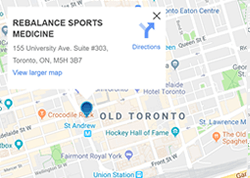


An Introduction to NeuroKinetic Therapy
What Is NeuroKinetic Therapy?
NeuroKinetic Therapy (NKT) is a form of manual therapy that uses manual muscle testing to assess motor control and movement patterns. Developed by David Weinstock in the early 2000s, NKT is based on the principle that the brain organizes movement through learned patterns — and that pain or dysfunction often results when these patterns are faulty.
In simpler terms: the body compensates. When one muscle is weak, overused, or injured, another muscle steps in to do the job — even if it’s not meant to. Over time, these compensation patterns become “hardwired” into the nervous system, leading to chronic pain, tightness, poor posture, or limited range of motion.
If you’ve ever experienced recurring pain, chronic tension, or feel like certain muscles are constantly “tight” no matter how often you stretch or massage them, there may be a deeper reason why. NKT allows us to go beyond the muscle tissue and into the body’s neurological movement patterns, helping us identify and correct the true root cause of dysfunction.
NKT seeks to identify and correct these compensation patterns by asking the most important question: Why is this muscle tight or painful?
How Does NKT Work?
At the heart of NKT is the concept of muscle relationships — particularly the relationship between overactive and underactive muscles. For example, a tight hip flexor might be compensating for a weak or inhibited glute. Instead of just releasing the hip flexor, NKT practitioners will test to find out why it’s tight and what it’s compensating for.
Here’s how a typical NKT session might be structured:
1. Intake and Discussion
We begin by talking about your symptoms, injury history, and any patterns you’ve noticed — such as stiffness in the morning, chronic tightness, or areas that never seem to relax fully.
2. Muscle Testing
Through a series of muscle tests, we assess how well specific muscles are functioning. If a muscle “tests weak” (meaning it cannot hold resistance), it could be “disconnected”— often because another muscle is doing its job. We then test nearby or related muscles to determine compensation patterns between muscles. For example, a weak abdominal muscle may cause the neck or shoulders to overwork, leading to upper body tension.
3. Release & Reactivation
Once the pattern is identified, the overactive muscle is released using a number of different techniques (deep tissue massage, dry needling, FST etc.), and the under active muscle is activated through simple exercises.
4. Corrective Exercises
To help reinforce these changes, you will be given simple home exercises tailored to your body. These may be small, specific movements you can do in just a few minutes per day — but they play a big role in long-term success.
NKT essentially reprograms your brain’s movement software. Rather than just addressing the hardware (muscles and joints), it goes a step deeper into the nervous system — making it a powerful tool for lasting change.
Who Can Benefit from NKT?
NKT is gentle and safe for nearly everyone. It’s especially helpful if you:
- Experience recurring pain in the same areas (e.g., low back, neck, or shoulders)
- Have postural issues from work, sports, or daily habits
- Feel “stuck” in your recovery from injury or surgery
- Struggle with chronic muscle tightness that doesn’t go away
- Are an athlete looking to improve movement efficiency and prevent injury
- Sit or stand for long periods and notice imbalances
Whether you’re an active individual, recovering from an injury, or just want to move more freely, NKT can help your body function at its best.
Why Combine NKT With Massage Therapy?
Massage therapy is excellent for releasing muscle tension, increasing blood flow, and creating a sense of well-being. But sometimes, even after deep tissue work, certain areas of the body remain chronically tight. Why? Because tension is often a compensatory response, not the problem itself.
Here’s how NKT complements massage:
Massage addresses the tissue — NKT addresses the reason the tissue is tight
Massage provides relief — NKT offers a path to long-term correction.
Massage calms the body — NKT educates the nervous system.
By combining both approaches, we’re able to provide not just temporary relief, but true transformation in how your body moves and feels.
What to Expect After a Session
After an NKT session, most people feel more balanced, lighter, and better aligned. You may notice:
- Improved mobility or range of motion
- Reduced pain or tension
- A feeling of strength in previously weak areas
However, because your body is learning a new movement pattern, it’s common to feel a bit sore or “off” for a day or two — like using muscles you haven’t used in a while (because you haven’t!). This is a sign the nervous system is recalibrating.
To get the most out of NKT, follow through with your homework — the corrective exercises assigned to you. They’re the key to locking in the changes and teaching your brain the new, correct way to move.

Tiara Brooks, Registered Massage Therapist
Tiara Brooks is a registered massage therapist practicing at Rebalance Sports Medicine in downtown Toronto.

 What to Expect From Your First Physiotherapy Visit
 The Benefits of Fascial Stretch Therapy [Demo]
 How Does Physiotherapy Work?
 Best Exercises for Low Back Pain